paladin vendor report | fraud prevention
The 2026 Paladin Vendor Report
 The commerce landscape is increasingly complex. This report cuts to the chase. Every day at Paladin Group, we’re in the thick of the fast-paced world of fraud solutions. With dramatic changes coming quickly, including AI “assistants” or “Agents” handling shopping tasks on the customers behalf, commerce and business models are ever-evolving. So it’s crucial to remain focused on streamlining and maximizing the capabilities of organizational fraud management operations while reducing checkout friction and preparing technology to identify legitimate agent-led activity without increasing false positives.
As experts on today’s solution providers, services, and tools, it’s our job to maintain a high-level view of the fraud prevention landscape as well as a detailed, on-the-ground understanding of every solution and every challenge. As the number of providers and services grow and technology evolves, merchants’ options become increasingly complex and varied. It’s our mission to serve as an authority on these products and their strengths, areas of opportunity, and enhancements, which is why we published the first-ever Paladin Vendor Report (PVR) in 2017.
It offered an unprecedented exploration of how merchants could mitigate the risks that come with accepting payments in an omni-channel, card-not-present world. Because of the constant evolution of many popular fraud mitigation solutions, we decided to provide the Paladin Vendor Report (PVR) on an annual basis. And now, we’re pleased to publish the latest: the 2025 Paladin Vendor Report. We’ve offered previous participants the chance to update their sections and incorporated additional participating vendors. What this report offers: the PVR helps merchants navigate the ever-expanding number of solution providers and services available to them. We spoke with vendors who offer risk mitigation products to merchants in the Card Not Present (CNP), omni-channel, marketplace, and fintech environments—then gathered, examined, and compiled the information for each participating vendor. Vendors had the option to participate in the report, and Paladin was compensated for the research performed. Our team spent hours in discussion with each of these vendors. We test-drove their products and gathered overviews of their services, marketing, sales, technologies, and future plans.
For vendors who chose not to participate in the report, we drew upon our extensive interaction, client input, and research to share a summary of their services. This report is a groundbreaking effort to gain as much firsthand knowledge as possible from fraud prevention vendors, compiling our findings in a way that’s helpful and revolutionary for our industry and the merchants who depend on us. This report is purely informational, and it is not designed to rate the products and services of the vendors, review them, give opinions on them, or give a thumbs-up (or down) about the vendors. The report’s intent is to provide clarity regarding what products and services fraud mitigation vendors offer. The vendors are segmented into five different categories based on their core offerings. Some of the vendors offer other products that complement their core offering or have additional functionality or products.
Some vendors provide services in overlapping segments, and this report offers a separate overview for each of the following categories:
• User Behavior & Reputation
• 3DS & Consumer Authentication
• Fraud Platforms & Decision Engines
• Identity & Data Verification
• Chargeback Management & Platform
We focus on several key areas during the discovery process. (Not all are applicable to every vendor, but for consistency, we examined each of the following wherever relevant.)
PRODUCT - The vendors overarching solution and functionality.
SERVICES - Available offerings to help merchants during integration and throughout their client lifecycle, including reporting.
BUSINESS DEVELOPMENT - Current partnerships and channels for direct and indirect customers.
MARKETING - Industries and verticals of focus. SALES - A breakdown of marketing and sales.
TECHNOLOGY - Integration and technical details associated with the solution.
Core functionality icon key

3rd Party API Capabilities
The ability to call out via API to third-party vendors for data, device fingerprinting, etc. 
Payment Gateway Capabilities
The ability to process payments directly through their own platform or solution.

Operational Support
Provides outsourced operational support, at a cost, for reviewing high-risk transactions and/or managing chargebacks.

AIPowered
Matching algorithms to detect anomalies in the behavior of transactions or users.
Guaranteed Chargeback Liability
Guarantees merchants do not take fraud losses for vendor-approved transactions.
ATO Detection Capabilities
Using device characteristics to detect account takeover/ account penetration.

Account/Client Management
Personnel dedicated to working directly with clients.

Device Fingerprint Capabilities
Built directly into the platform (not a third-party API call).

Historical Sandbox Testing
Ability to test rules against historical transactions in a non-production environment.

Professional Guidance/Services
Provides outsourced support for data analysis, rules-building, and recommended best practices, etc.

User Behavior Capabilities
Built-in (not via third-party) capabilities to capture cursor movements, mouse clicks, and time on a merchant site.

Pre-Authorization Functionality
Ability to score and/or decision a transaction prior to authorization.

Fraud Engine/Platform Functionality
Ability to score/decision a transaction post-authorization.
Non-Production Real Time Rules Testing
Ability to test real-time transactions in a non-production environment.
Chargeback Management & Platforms
Chargebacks are just one of the many risks that threaten a business’s success, but they also happen to be the most dangerous. If left unchecked, chargebacks steal profits and threaten a business’s longevity. These solution providers can help increase your chargeback representment win ratio while lowering the cost of chargeback management. The breadth of services can range widely—some services simply provide tips on how to address inbound chargebacks, while others offer fully outsourced and fully integrated options. And many offer everything in between. These services blunt the overall impact of chargebacks whether the fraud is classified as malicious, friendly, affiliate, or otherwise.
Chargeback Gurus (CBG) is the leading automated AI-orchestratedchargeback management
platform, helping merchants protect and recover more revenue.
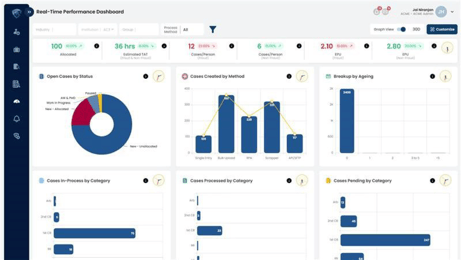
CBG’s solutions are powered by sophisticated technologies, rich analytics, and deep industry expertise. CBG’s chargeback management platform provides real-time insights, predictive analytics, and comprehensive reporting to help merchants stay ahead of evolving chargeback challenges.
Their solutions combine automation, AI, and deep industry expertise with configurable sophisticated technologies to deliver hundreds of millions of dollars in recovered revenue to clients. The platform offers support in optimizing a range of KPIs, including:
• Revenue protection
• Bad debt reduction• Recovery (win rate, recovery amount, recovery rate)
• Chargeback health and prevention (chargeback ratio, alert and Order Insight deflection, fraud ratios, VAMP ratio, and MID health)
• Operational efficiency and quality (Turn Around Time (TAT), Work In Progress (WIP), productivity, analyst/supervisor performance, evidence quality score, ageing analysis, and winnability
CBG serves many of the largest and most recognizable brands in the world and works within all major industries, including hospitality, marketing and advertising, car rental, retail, entertainment,
telecom & media, health, wellness & fitness, subscription, and insurance.
Their collaborative approach offers flexible, custom solutions to each merchant and their specific goals and challenges. Through iterative processes, they take an adaptable, constantly evolving approach. This includes industry-specific Customer Data Platform (CDP) frameworks, feedback loops, and A/B testing to optimize outcomes. A white-label model with multitenant Partner Management and cobranding/white-label capabilities also exists.
CBG offers a Chargeback Profile Analysis as a proof of concept, in which CBG processes a prospective client’s historical data through the CBG platform to simulate “what-if” scenarios and quantify potential improvements in win rate and recovery, along with reductions in chargeback exposure, before launch. This enables data-driven ROI projections and risk-free evaluation of the solution.
CBG address both pre-dispute and post-dispute categories through Self-Service, Managed Services, and SaaS offerings:
Managed Services (CBG-operated):
• Smart Chargebacks (Representment): CBG fully manages chargeback disputes and evidence submissions to maximize recovery.
• Smart Alerts (Prevention & Early Resolution): Proactively resolving disputes before they become chargebacks leads to loss reduction.
• Order / Order Intelligence (OI): Real-time access to detailed order and transaction data helps issuers and merchants resolve disputes faster, reduce chargebacks, and improve customer experience through enhanced data transparency.
Smart Dispute Solutions (Client- or Merchant-operated):
• Smart Dispute Alerts: SaaS self-service alert management, guided refund workflows, and integrations with Verifi/ Ethoca/Amex/Paypal.
• Smart Dispute Solutions: SaaS Self-service platform manages chargeback cases and evidence.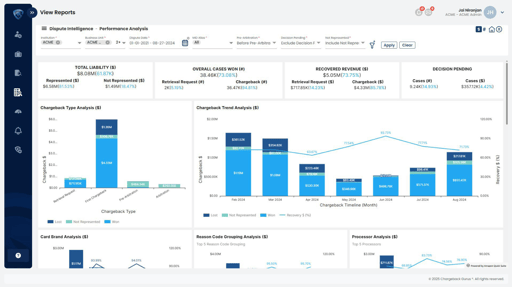
For Stripe users, a Marketplace App also exists:
• Plug-and-play app for Stripe merchants enables Prevention Alerts workflows with minimal setup.
Reporting options available, include:
• Standard Analytics: Executive Summary
• Smart Enhanced Analytics: Performance Analysis, Root Cause analyzer
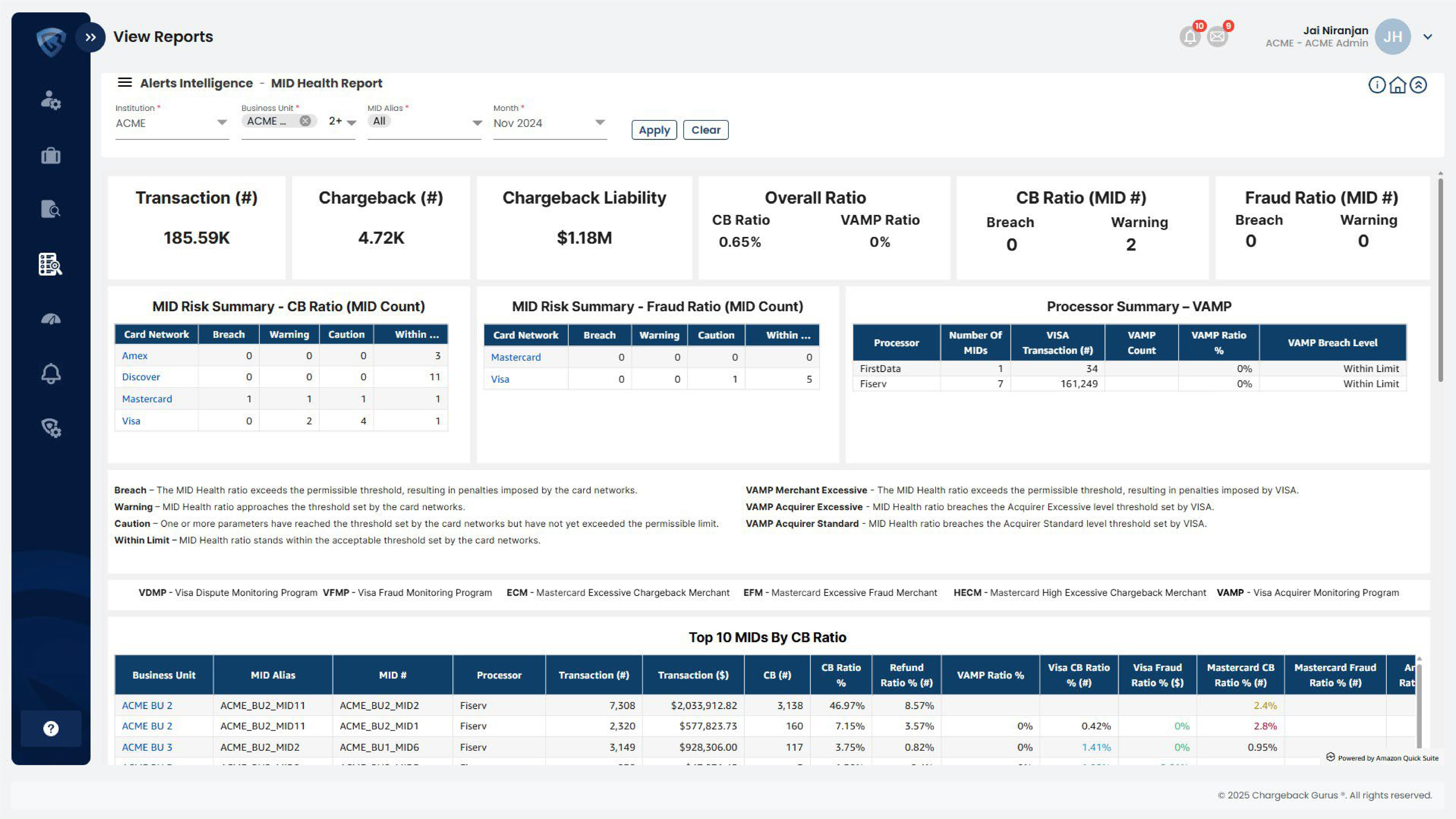
• MHR + Custom Notifications: MID Health Report with tailored alerting/notifications for thresholds and anomalies • Descriptive Analytics
• Ad hoc: Client‑specific analyses and custom reports available on request
Regarding full integration post proof of concept, CBG aims to “meet its clients exactly where they are technologically.” The platform is flexible with integration methodologies and no-code/ low-code solutions, when needed. The solution is also offered through several third-party partnerships.
• Modern APIs & SDK:
• Onboarding API Suite – Users and Merchants/LOBs/ MIDs, Service Setup
• CB Prevention – Integrations with CRM systems to manage refunds
• CB Representment – APIs to ingest Chargeback, Transaction, Order/CRM data
• Network/provider integrations: Visa, Verifi, Mastercard, Ethoca, Amex , 40+ processors/acquirers
• Robotic Process Automation (RPA)/automation where APIs are unavailable, with centralized bot control



.png?width=88&height=32&name=BBB_ABSeal_H_RVS_7469_US-4256x1542-8b06aa0%20(1).png)

